

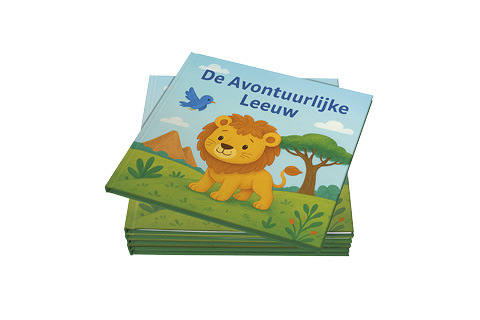
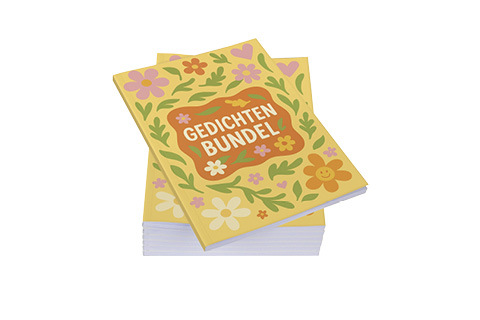
Babies, toddlers, and children love pictures. So, with a picture book on the couch or in bed, you ensure they listen to you closely and concentrate. Designing the book yourself makes reading aloud even more fun for you. And you don’t have to be a Van Gogh to do it! With our six tips, you will write and illustrate a picture book to dream away with.
Tip 1. Give the main character a problem
A problem makes for a good story. It can be very simple. Think of a bunny that has lost its friends, a girl who has no friends, or a caterpillar that always wants to eat. In any case, ensure that the problem resonates with your target audience.
Tip 2. Choose a simple storyline
A picture book always has only one storyline, which you tell in a clear rhythm. The solution to the problem is not there until the very last moment. After all, a story for children always has a happy ending.
Tip 3. Ensure you have enough visual material
When writing a picture book, the illustrations are the main focus. First, ensure you have enough images—more than you intend to use. This allows you to select and create rhythm in the book. Consider calm and active images, as well as large and small pictures. Divide your story into steps and come up with a suitable image for each step. Do you find this difficult? Then your story is probably not progressing enough.
Tip 4. Write active sentences
In virtually every text, it is better to avoid passive sentences, so this also applies to picture books. Active sentences are simpler and easier to read. In an active sentence, the subject is central. Just look at this example:
Passive: Frog received food from all his animal friends.
Active: All the animal friends gave Frog food.
Tip 5. Play with words
The text can make or break your picture book. For young children, we recommend keeping sentences short. Aim for a maximum of ten sentences per page. This encourages children even more to look at the pictures. Also, don’t forget that a read-aloud book needs to sound good. You can achieve this, among other things, with rhyme. For example: for the princess, cleanliness is quite normal. That is why she cleans every day. Tip: read your story aloud to hear how it sounds.
Tip 6. Use humor
Successful picture books are often full of jokes. Do keep in mind, however, that young children have a completely different sense of humor than you do. You might not find an elephant who can no longer walk because he ate 100 pancakes very funny. But I bet your four-year-old will tell the teacher about it at school the next day.
Have a picture book printed
With these tips, writing a picture book becomes much easier and more fun. Have you found the right combination of text and images? You design the pages online using software of your choice, to then create and produce a picture book. At Bookadew, almost anything is possible. We print high-quality children’s books in small runs, ready for shipment within five working days. Ideal! Use our online price calculator to put together your book. Do you have questions or are you having trouble? Then feel free to contact us at any time.